Tiny Towns, Big Crowds
One of the strangest and most charming parts of hiking the Camino is watching dozens and dozens of hikers slowly converge on villages so tiny you might miss them if you weren’t careful.
And when I say tiny, I mean really tiny.
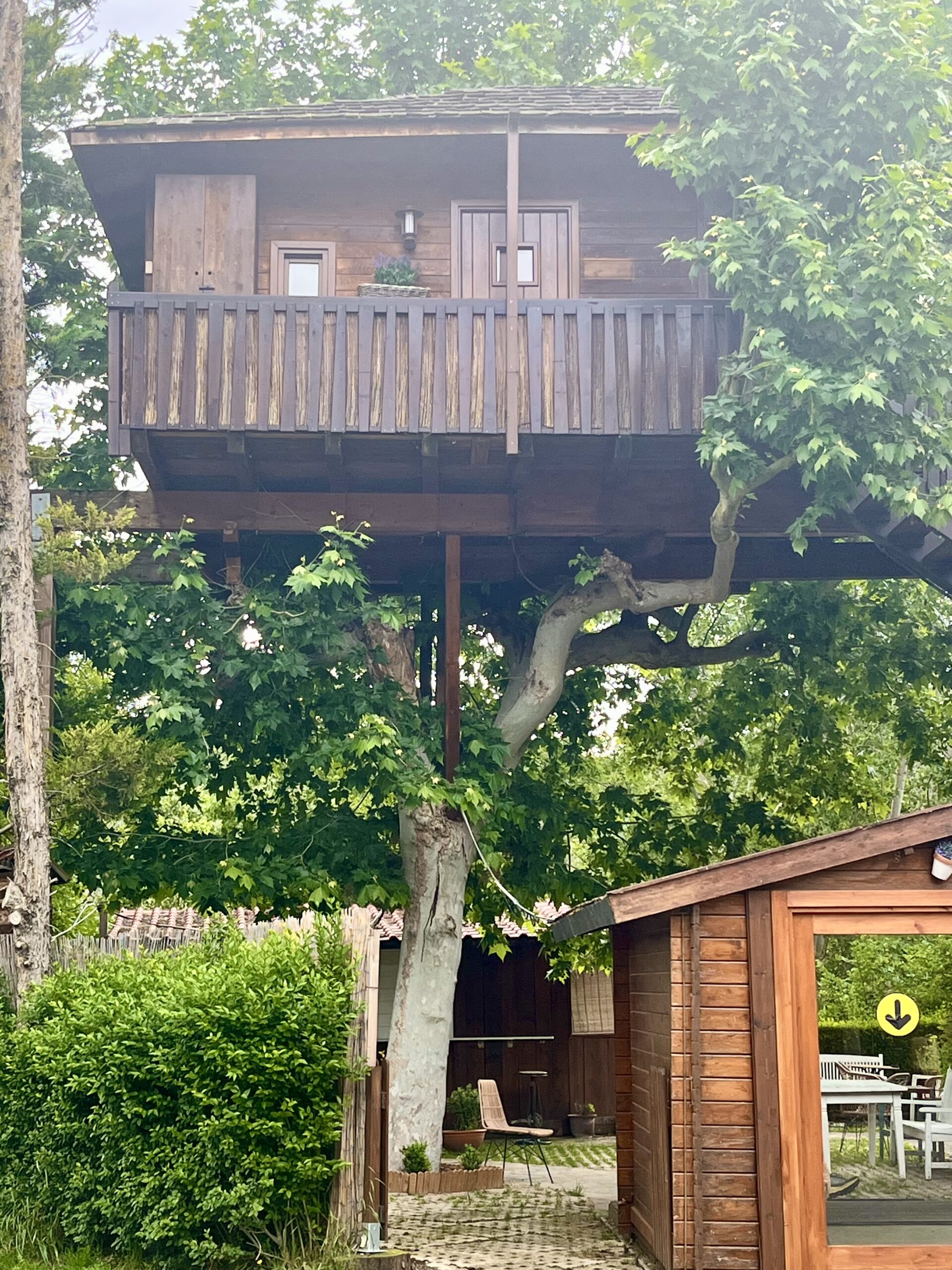
Some villages along the route have populations of less than a couple hundred people. A church (there’s always a church), one café, maybe a small grocery store if you’re lucky, and somehow…multiple places for pilgrims to sleep. It feels like entire towns exist in partnership with the Camino.
By early afternoon, the quiet streets suddenly come alive. Hiking poles click against cobblestones, backpacks pile up outside cafés, and tired pilgrims shuffle through town looking for a shower, food, and a well deserved beer. Yellow arrows decorate walls and sidewalks, while the iconic Camino shell seems to appear everywhere.
The Daily Camino Puzzle: Where Are We Sleeping Tonight?
There seems to be two schools of thought when it comes to lodging on the Camino. Those that just show up and only worry about reserving the day before or those that have mapped out reservations for virtually every night.
Your overnight accommodation is often what determines how many miles you walk that day. It’s fine if there are lots of little towns, but sometimes it can be 6-8 miles in between towns. In my case, I fell into the category of wanted to know where I was going to sleep…and for the most part I’m thankful I booked in advance. May is busy month on the Camino. It is very common to overhear conversations about towns being 100% booked and hikers having to walk miles and miles to find a place to sleep.
In busy stretches, especially in smaller villages, the availability of rooms can quietly shape your entire day. Suddenly, distance, weather, energy levels, and lodging all become part of one giant Camino strategy equation. .
Some pilgrims plan every night months ahead. Others simply walk until their legs say “enough” and hope something is available. Both strategies somehow seem to work…most of the time.
The Classic Camino Stay: The Albergue
If there’s one accommodation that defines the Camino experience, it’s the albergue.
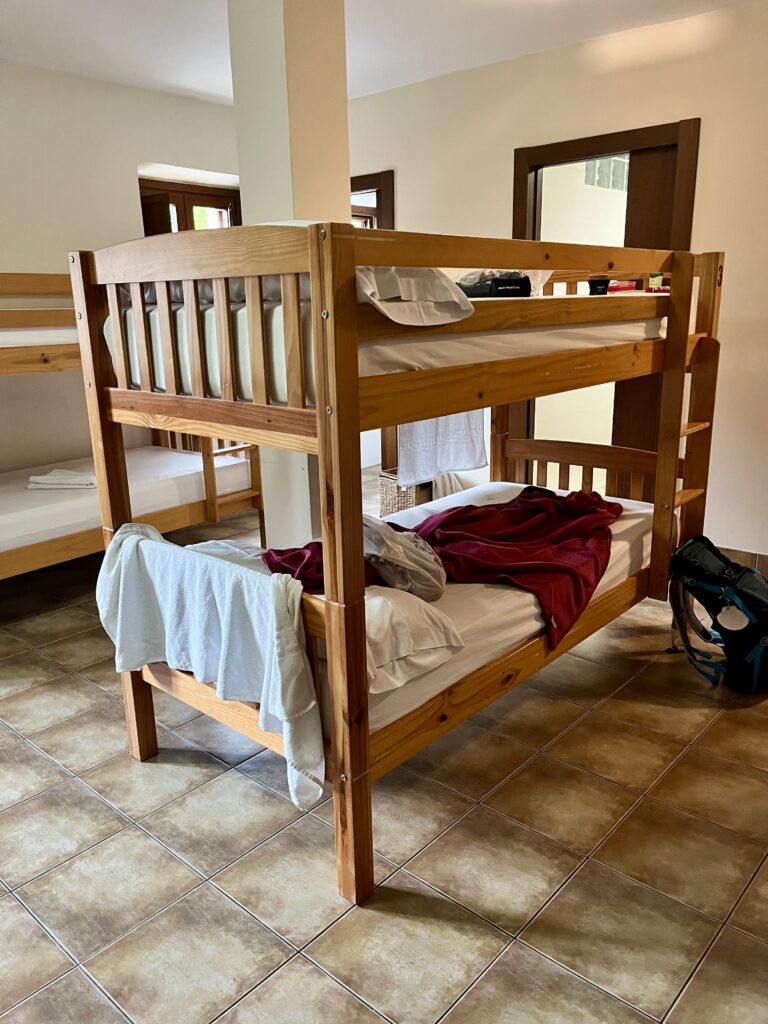
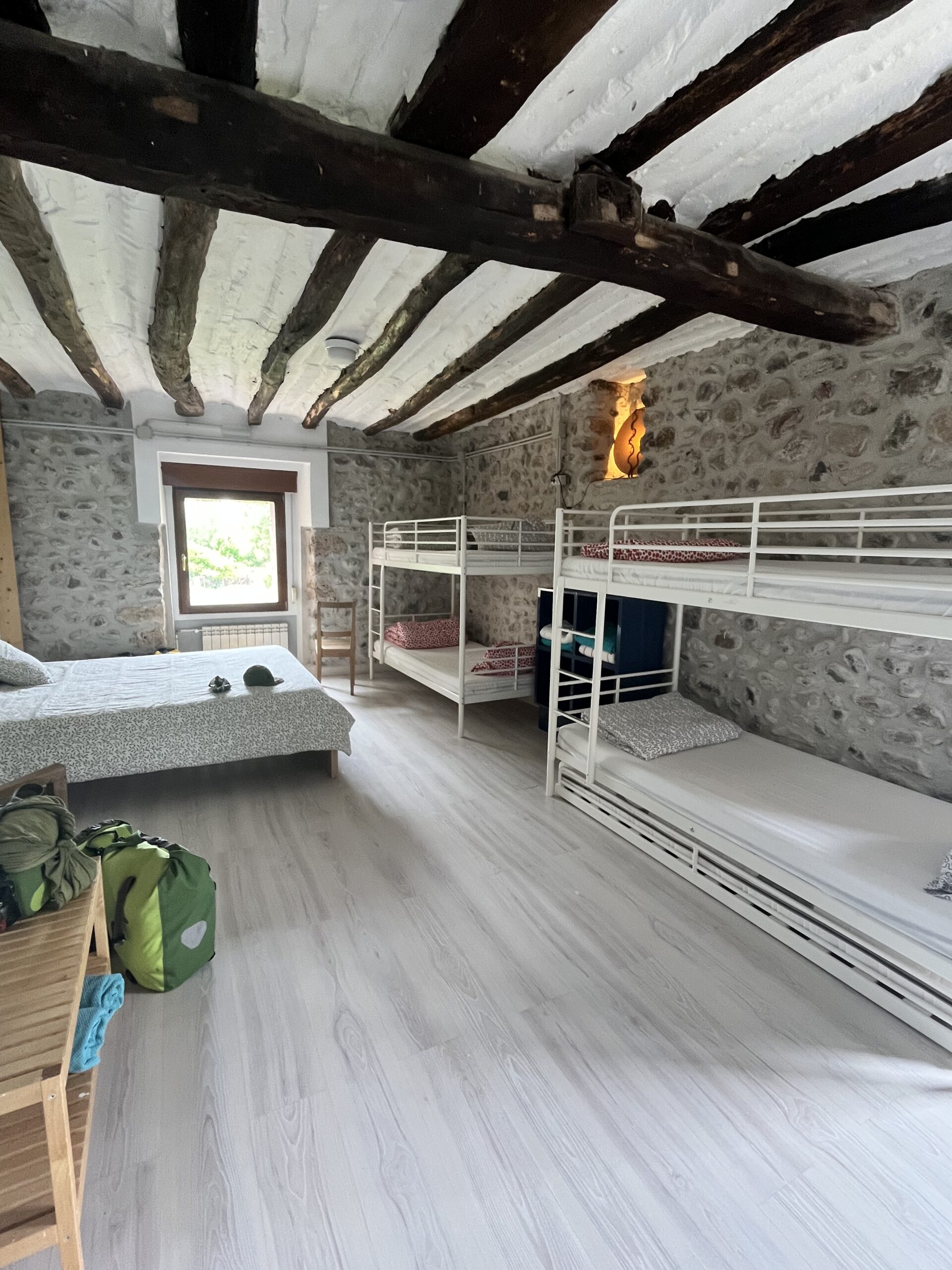
Traditional pilgrim hostels are often the most affordable option, usually costing around 12–16 euros per night, and they come with one very important expectation: you will probably be sleeping in a bunk bed. Think summer camp…for adults with sore feet.
Rooms are typically shared dorm-style, ranging anywhere from a handful of beds to large rooms filled wall-to-wall with snoring pilgrims. Bathrooms are communal, privacy is limited, and earplugs quickly become one of the best investments you’ll make.
But albergues are also where much of the Camino magic happens.
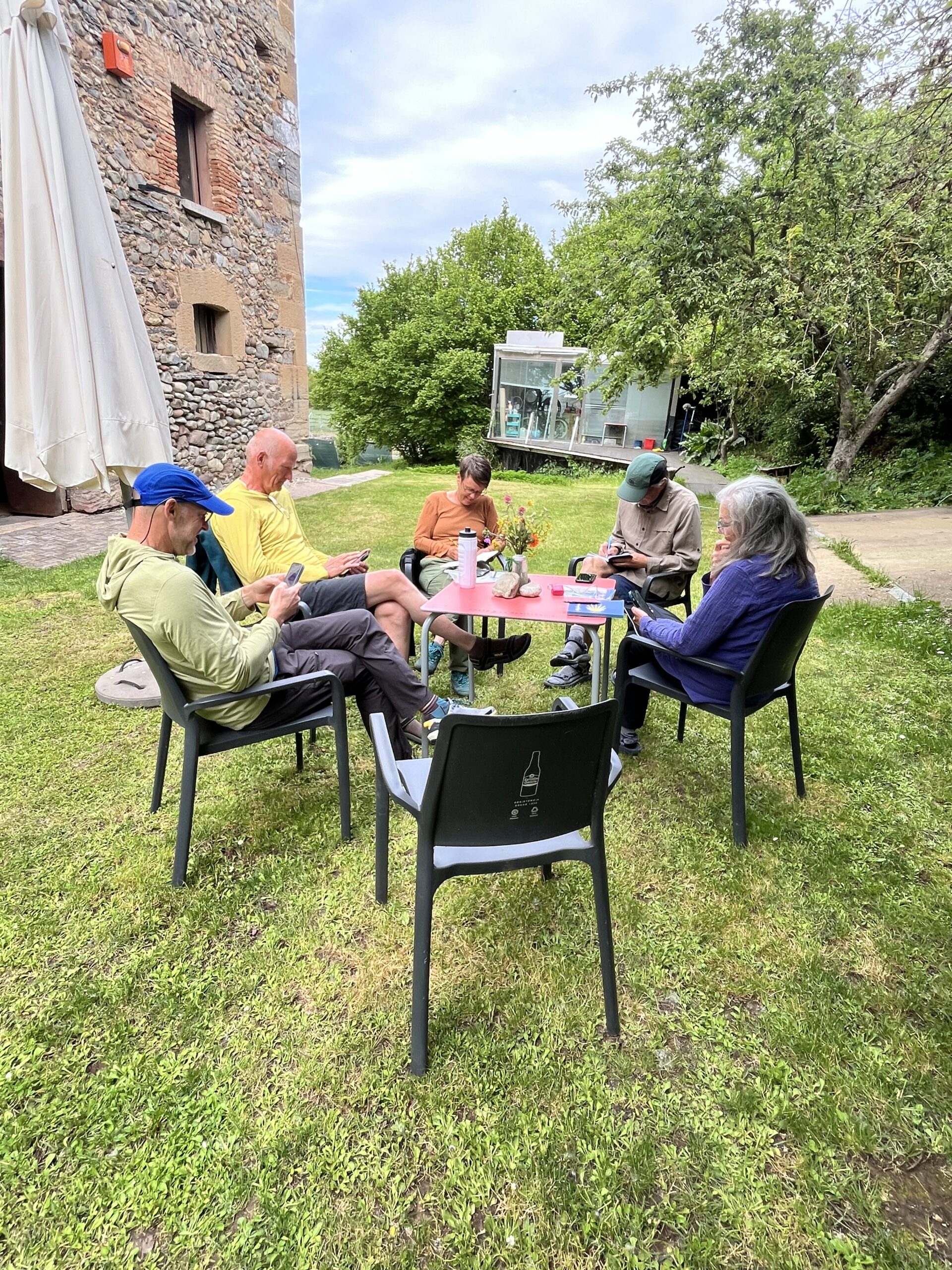
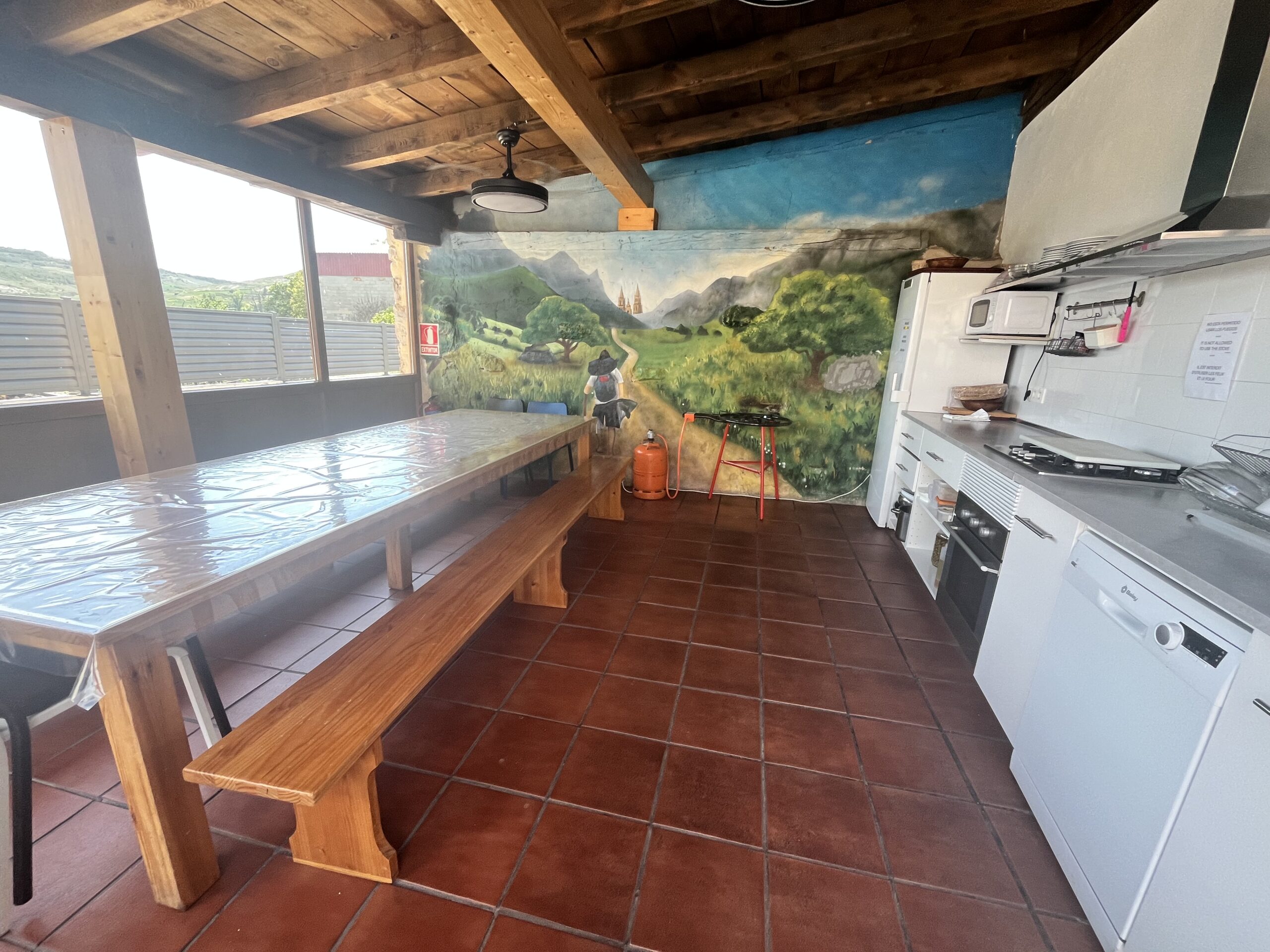
Especially in tiny villages, many offer shared pilgrim dinners, where strangers from all over the world gather around long tables to swap stories about blisters, weather, wrong turns, and what inspired them to walk hundreds of miles across Spain. One day you’re eating dinner with someone from Australia, Germany, Brazil, and Canada—and by morning, you’re all walking together.