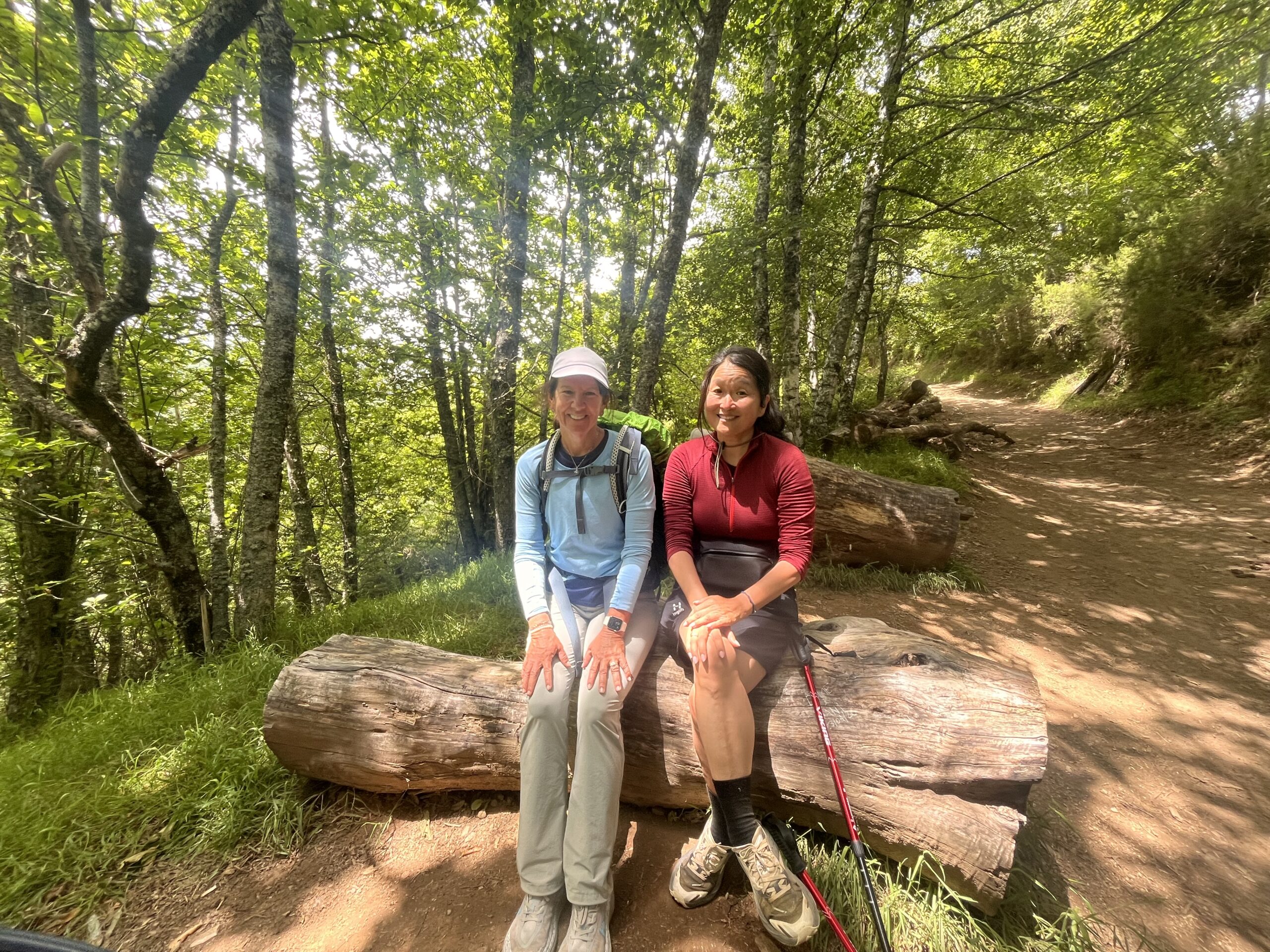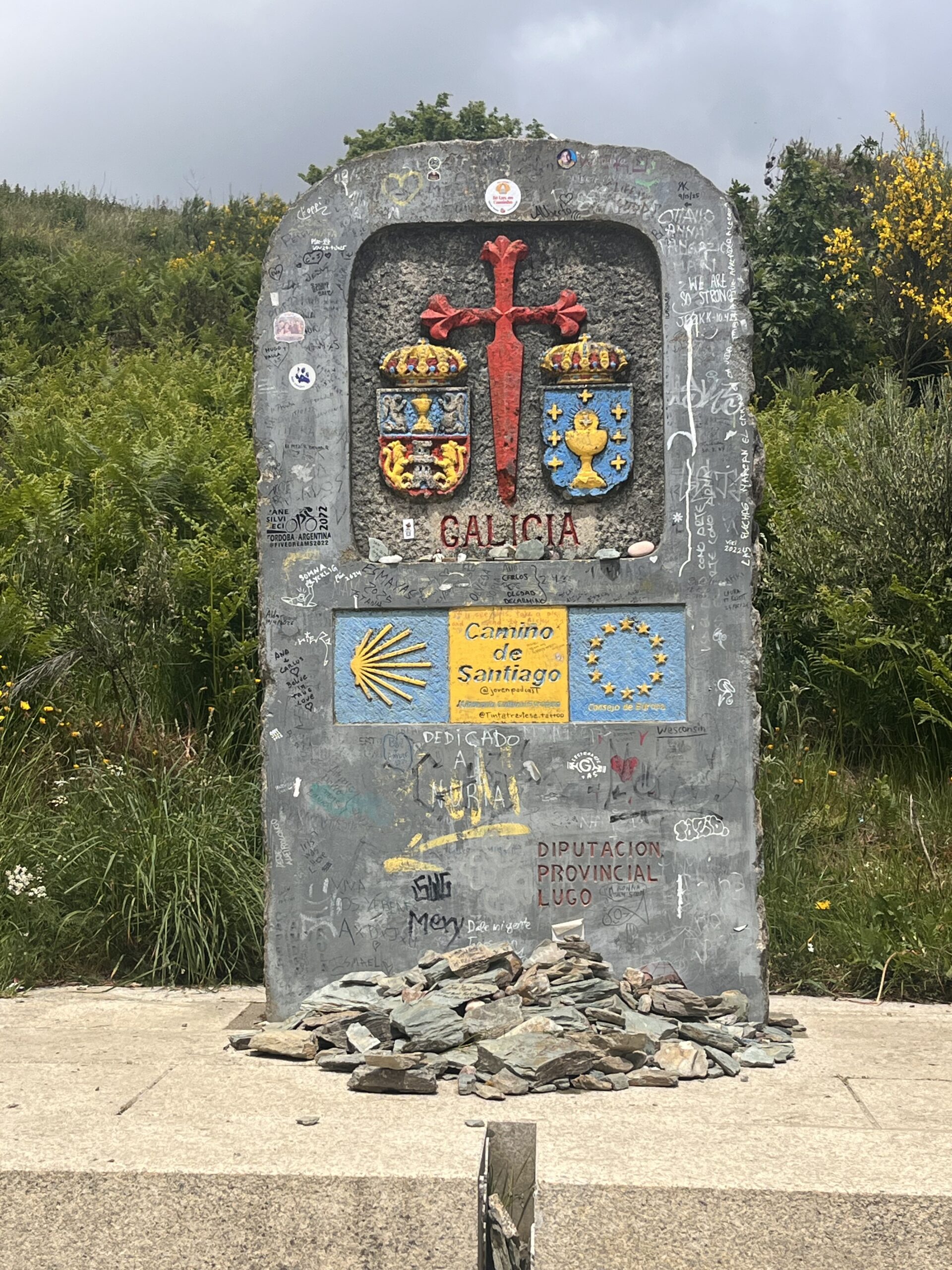
After weeks of walking across the varied landscapes of Navarra, La Rioja, Castilla y León, and El Bierzo, crossing into Galicia felt like stepping into an entirely different world. The Galician section of the Camino Francés begins at O Cebreiro, a tiny mountain village perched at 4,265 feet above sea level, and continues approximately 100 miles to Santiago de Compostela. For many pilgrims, this marks the beginning of the final chapter of their journey—a stretch filled with green mountains, ancient villages, Celtic influences, and the growing realization that Santiago is finally within reach.
The transition into Galicia was noticeable immediately. After days of hiking through temperatures in the mid-80s, we were greeted by cool mountain air and daytime temperatures mostly in the 60s. The change was refreshing. The heat that had accompanied us across much of the Meseta and León gave way to nearly perfect hiking weather. Misty mornings, dense forests, and lush green that Galicia is famous for.
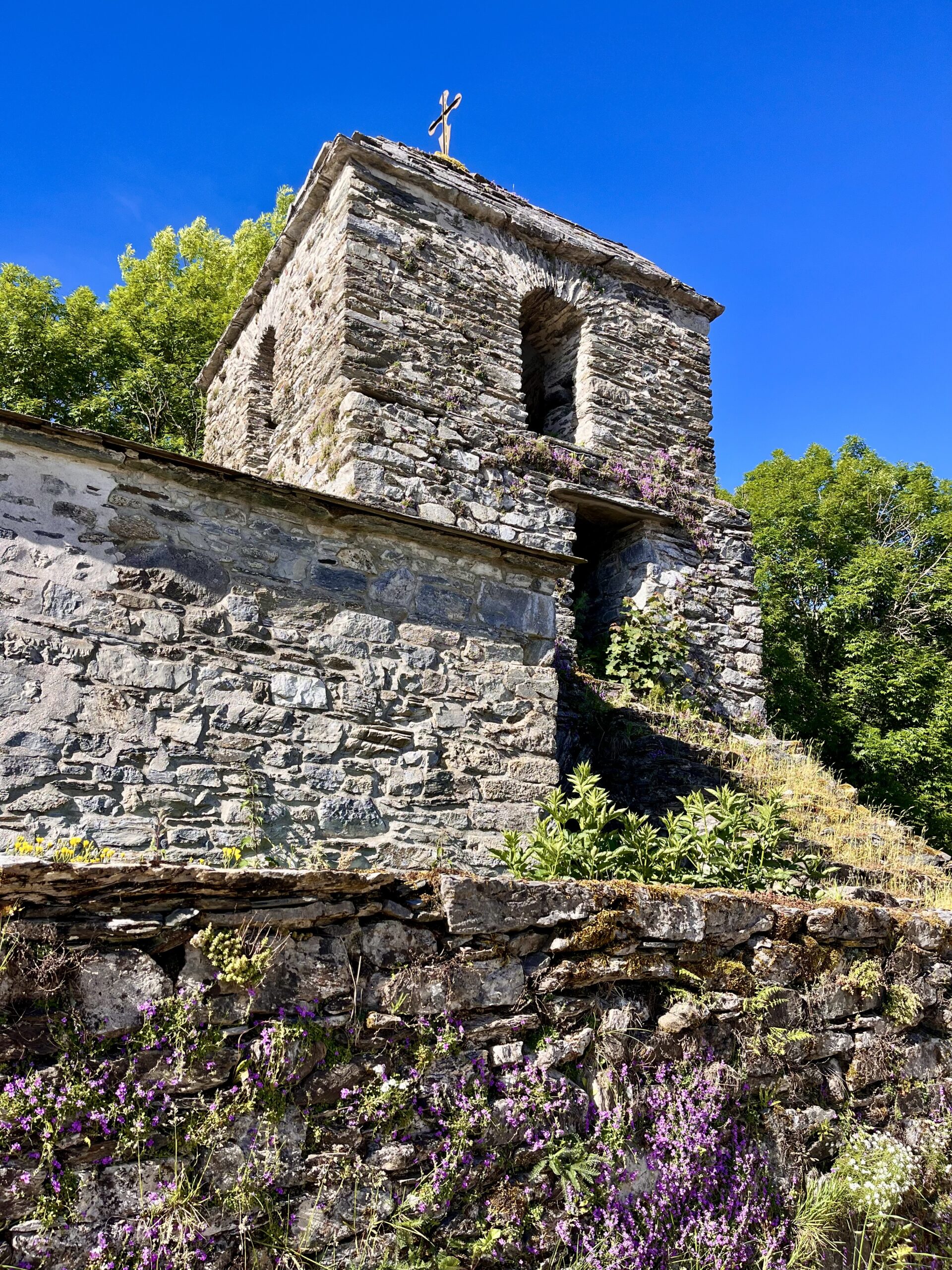
Galicia also carries a distinct identity within Spain. Its culture, music, and traditions have strong Celtic roots, and that heritage is still visible throughout the region. Stone villages, slate roofs, moss-covered stonewalls, and rolling hills create a landscape that feels more like Ireland than Spain. For centuries, pilgrims have viewed the arrival in Galicia with open arms.
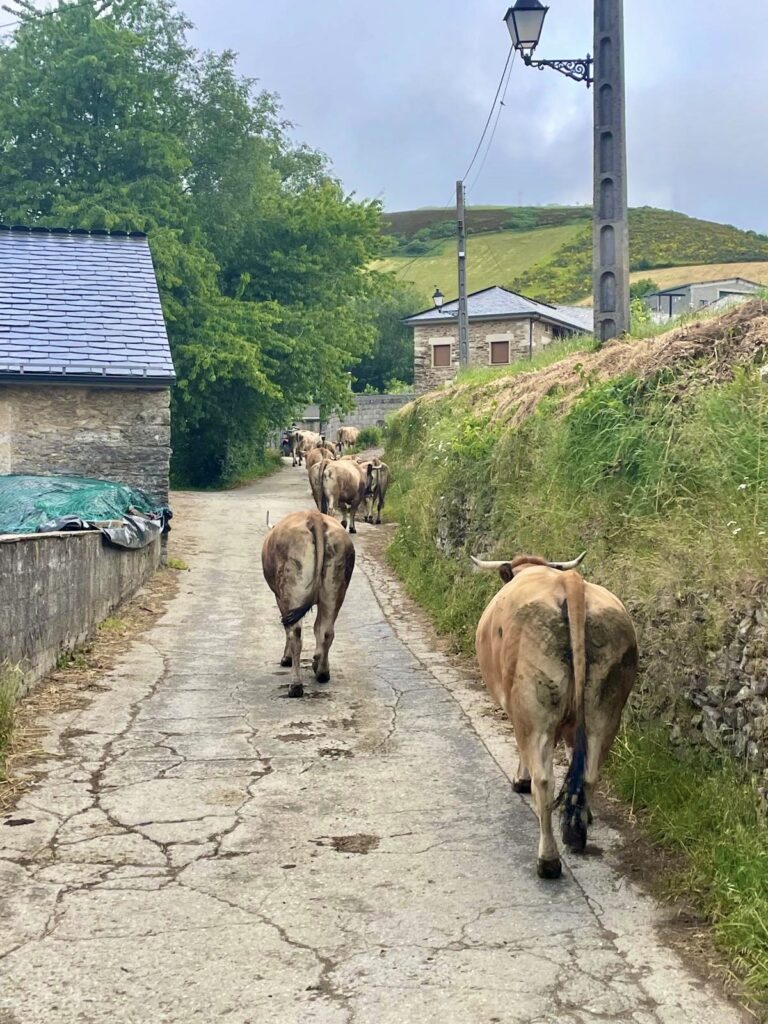
One of the things I loved most about the first days in Galicia was the character of the towns. Unlike the larger cities we had passed through earlier in the journey, these villages felt like stepping back in time. Walking right in the middle of small working farms, cows grazing in the fields (and sometimes directly on the trail), and stone homes seemed to blend naturally into the countryside. It felt like it was right out of a story book.
O Cebreiro: Gateway to Galicia
No place captures the spirit of Galicia better than O Cebreiro. Reaching it requires one of the most memorable climbs on the entire Camino Francés. After leaving Villafranca del Bierzo, the trail steadily gains elevation. The climb is long and demanding, especially after a full day on the trail, but every step feels earned. Then suddenly, the stone buildings of O Cebreiro appear on the mountaintop, marking your arrival in Galicia.
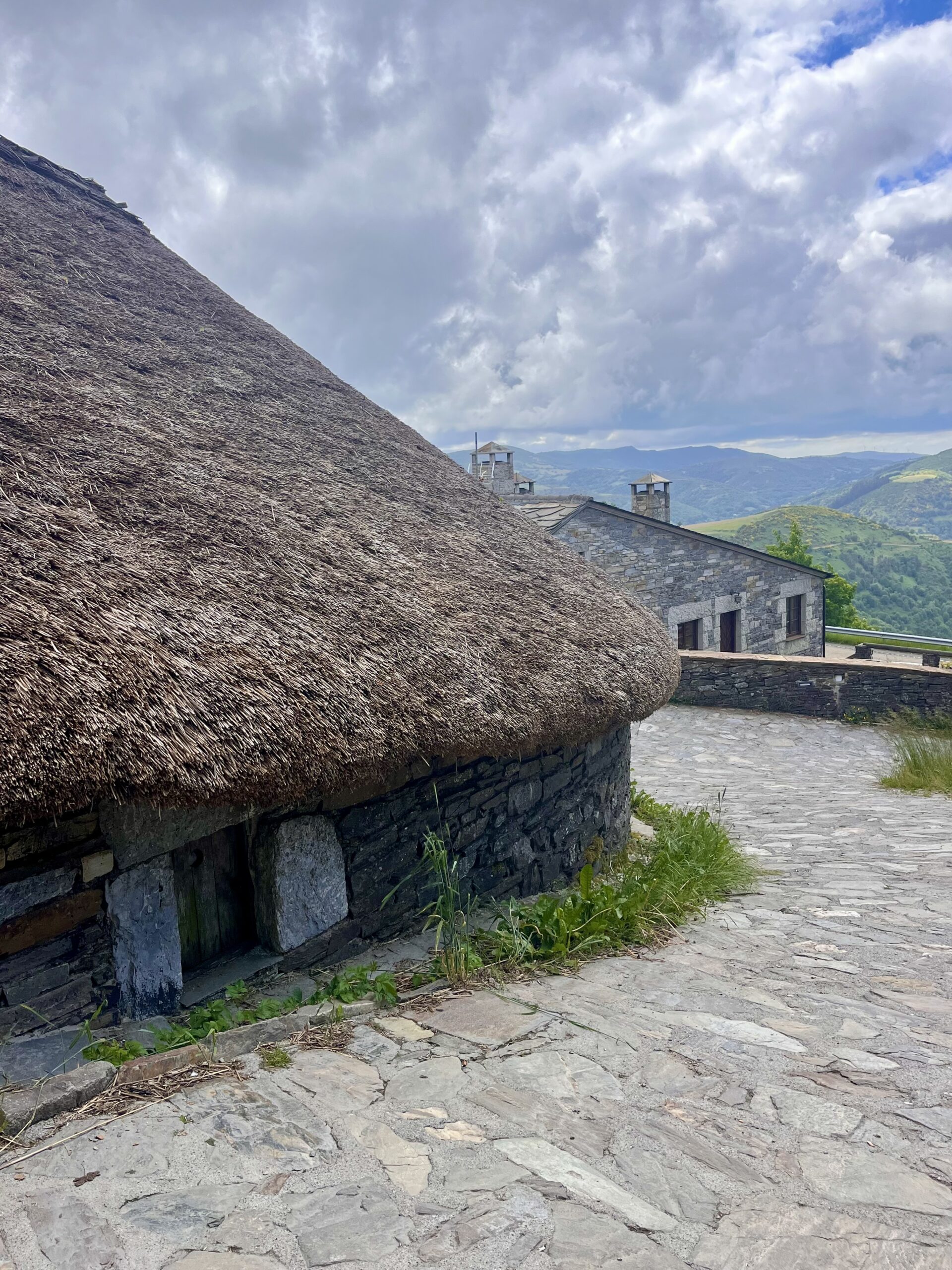
O Cebreiro has welcomed pilgrims for more than a thousand years and remains one of the most iconic villages on the Camino. Famous for its ancient pallozas—circular stone houses with thick thatched roofs dating back to pre-Roman traditions—the village feels frozen in time. Standing on the ridge with sweeping views of the surrounding mountains, it is easy to understand why generations of pilgrims remember this place so vividly. After the effort required to reach it, O Cebreiro feels less like another stop on the Camino and more like a reward, a gateway into Galicia, and a reminder that Santiago is finally within sight.
O Cebreiro: Gateway to Galicia
No place captures the spirit of Galicia better than O Cebreiro. Reaching it requires one of the most memorable climbs on the entire Camino Francés. After leaving Villafranca del Bierzo, the trail steadily gains elevation. The climb is long, steep and the hardest part comes towards the end of a full day on the trail. Then suddenly, the stone buildings of O Cebreiro appear on the mountaintop, marking your arrival in Galicia.
O Cebreiro has welcomed pilgrims for more than a thousand years and remains one of the most iconic villages on the Camino. Famous for its ancient pallozas—circular stone houses with thick thatched roofs dating back to pre-Roman traditions—the village feels frozen in time. Standing on the ridge with sweeping views of the surrounding mountains, it is easy to understand why generations of pilgrims remember this place so vividly. After the effort required to reach it, O Cebreiro feels less like another stop on the Camino and more like a reward, a gateway into Galicia, and a reminder that Santiago is finally within sight